
Blog / Trade shows
Trade shows
10 Best Trade Show Giveaways to Attract Visitors and Generate Leads
The best trade show giveaways are the ones a visitor still uses after the show, handed out so your team can follow up. In ASI’s 2026/2027 US findings, a typical promotional product generates about 3,300 impressions over its life, at about six-tenths of a cent per impression. Seventy-eight percent of US consumers would view the advertiser more favorably, and 76 percent would be more likely to do business with them. A short list with a job for each item is what gets you there.
Marketing wants traffic. Procurement wants a sample and a price. Admin moves the freight. HR joins when the booth is also a hiring stop. A manager sets the ceiling.
One invented example runs through the guide, and its prices are planning numbers, not a quote. Northline Components, a 40-person distributor in Columbus, Ohio, takes a 10-by-20 booth to a three-day Chicago show. The giveaway budget left is $6,500. Eighteen customer meetings are booked. Two recruiters use the booth on Thursday afternoon.
What a trade show giveaway has to do
A giveaway has to be worth keeping, sound enough that the quality does not embarrass the brand, and tied to a next step.
Usefulness is why people keep it
In a PPAI study of more than 3,400 US adults, nearly 90 percent keep branded merchandise at least occasionally. Usefulness was the reason for 55 percent, and quality for 21 percent. VistaPrint’s 2026 survey of 1,000 US adults found 67 percent want a promo to be useful and 44 percent want it unique. The workplace was the main source for 35 percent. Career fairs were a key channel for 26 percent, and trade shows were a common source for 21 percent.
Quality is why they throw it away
PPAI’s 2025 study, Promos’ 5-Second Impact, surveyed 1,000 US consumers who had received promotional products. Sixty-two percent would discard an item for poor material or build quality. The full discard list is under what to skip.
The same study is why a sound item still earns the budget: 61 percent remembered the brand, 77 percent had looked it up, and 72 percent had purchased because of a promo. PPAI’s 2025 sales estimate put the US channel at $27.1 billion, up 1.3 percent and behind inflation. In PPAI’s keep-or-toss study of more than 3,400 US adults, 66 percent preferred fewer, higher-quality items, against 20 percent who preferred more, cheaper ones.
The handout has to earn a next step
In PPAI’s study of more than 3,400 US adults, 42 percent visited a website afterward and 13 percent did nothing. Among people who had received a promotional product, VistaPrint found 50 percent visited the website and 39 percent would recommend the brand.
A QR code is the path. It becomes a lead when you capture a name, a company, and what the person wanted.
Write the next step on the purchase order. “Tote, no scan.” “Tumbler, badge scan and a one-line note.” “Power bank, demo completed.”
Who decides, and what each team owns
Giveaways go wrong when five people each think they own the whole decision. Split the work this way.
| Role | Decides | Needs from the others | Typical failure |
|---|---|---|---|
| Marketing | Which item does which job, and what counts as a lead | A unit-price ceiling and a ship date | Ordering a crowd item and calling every recipient a lead |
| Procurement | Supplier, sample, artwork file, purchase order | Quantities by item, not one blended “swag” line | The cheapest pen, approved because the unit price looked efficient |
| Admin or office | Freight, drayage, on-site storage, what returns | Weights, carton counts, and anything that melts or contains a battery | Tumblers that miss the advance warehouse and arrive as a floor shipment at show rates |
| HR | The hiring hour, and any employee-only gift | A separate quantity that does not raid the buyer gifts | Recruiters handing power banks to every student who walks up |
| Business manager | The total, and who may give the premium item | A one-page scorecard after the show | Judging the booth by how fast the table emptied |
Match the giveaway to the booth job
Sort by job before you sort by price. Traffic items get people to stop. Conversation items go to people who stay long enough to tell you what they need. Follow-up items go to people sales will call, and many of them should ship after the show.
Traffic, conversation, and follow-up
- Traffic. Light items for anyone who stops: totes, a pen with a notebook, lip balm, a webcam cover.
- Conversation. Gated by a badge scan, a demo, or a meeting already booked: drinkware, a power bank, a food gift, a shirt in the right size.
- Follow-up. Ships the next week. Save personalization for people sales will call.
A budget split you can show finance
Put about half the dollars on traffic items, about a third on gated items, and the rest on follow-up, freight, and samples. Northline’s $6,500 sheet uses placeholder prices. Procurement replaces every number with a quote.
| Line | Job | Units | Unit | Spend |
|---|---|---|---|---|
| Reusable totes | Traffic | 250 | $3.50 | $875 |
| Pen and pocket notebook | Traffic, and HR’s hour | 200 | $2.75 | $550 |
| Lip balm | Traffic | 120 | $1.25 | $150 |
| Webcam covers | Traffic for a desk audience | 80 | $1.10 | $88 |
| Insulated tumblers | Conversation | 60 | $14 | $840 |
| Power banks | Demo gate | 25 | $22 | $550 |
| Food gifts | Conversation | 40 | $9 | $360 |
| T-shirts for a drawing | Gated | 30 | $12 | $360 |
| Named gifts, shipped after | Follow-up | 8 | $40 | $320 |
| Samples, freight, spare cartons | Admin | — | — | $400 |
| Total planned | All lines | — | — | $4,493 |
The sheet spends $4,493 and leaves about $2,000 for a crushed carton, freight, or a better follow-up. In PPAI’s January 2026 outlook, 60 percent of distributors expected higher sales, and only 53 percent expected to make a profit.
How many to order for a US show
Order against your booth, not against the show’s attendance. Northline expects about 90 badge scans a day, 270 across three days. They order 250 totes, close to that scan count. They order 60 tumblers because that is how many real conversations four people can hold. They order 25 power banks for 18 booked meetings plus a few walk-up demos. They order eight follow-up gifts because sales has already named eight accounts worth a call.
Without last year’s scans, multiply real conversations per hour by staffed hours. That is the ceiling for conversation items. Follow-up items match the opportunity list, plus two spares. Add about 10 percent for damage, not a second full order.
The 10 best trade show giveaways
The list is ordered by booth job. Each entry answers the same three questions: why people keep it, who should receive it, and how it captures a lead. Impression counts below are the US cuts from ASI’s 2026/2027 Ad Impressions Study. They estimate how often a kept item is seen, not how many people walk a booth.
1. Reusable tote bags
Why attendees keep it
By mid-morning, hands are full. Yours still has to fit a catalog and survive the ride to the airport.
- ASI: about 4,900 lifetime impressions, at about a tenth of a cent per impression.
- 81 percent would view the advertiser more favorably, and 77 percent would be more likely to do business.
- 84 percent would keep one for at least a year. 92 percent would use it at least monthly.
- VistaPrint put totes at 34 percent on its want-list.
Who should receive it
Almost anyone who stops, including Thursday’s recruiting hour. A booked buyer still gets a conversation item. The tote can carry it.
How it captures a lead
Usually it does not. Put a QR card inside, offer the tote, and ask one question. If they stay, scan a badge with the tumbler or the food gift. Report totes as traffic, or Thursday will look like your best pipeline day.
2. Insulated tumblers and water bottles
Why attendees keep it
This is the item people still use in March. A ceramic mug is a poor object to carry through an airport.
- ASI: about 1,300 lifetime impressions, at about one cent per impression.
- 80 percent would view the advertiser more favorably, and 74 percent would be more likely to do business.
- 80 percent would keep one for more than a year. 87 percent would keep it because it is useful.
- VistaPrint put bottles at 33 percent and travel cups at 29 percent.
Who should receive it
People who stop long enough to talk. Weigh a carton before you approve it. If freight adds several dollars a unit, put that in the price before you compare it with a lighter item. Some tumblers get left in hotel rooms.
How it captures a lead
Trade it for a badge scan and one sentence about what they asked. Name, company, and that sentence can live in a shared note until evening. A scan with a blank note is how the list gets rebuilt, badly, on the plane.
3. Pens and pocket notebooks
Why attendees keep it
A pen still works in a session. Write a page with the sample before you approve it.
- ASI: about 1,900 lifetime impressions for a writing instrument. 64 percent would use one daily, and 77 percent would be more likely to do business with the advertiser.
- Notebooks are quieter: about 500 impressions, with 75 percent using one at least weekly.
- VistaPrint ranked pens third, at 38 percent.
- Poor quality is PPAI’s top discard reason, at 62 percent.
Who should receive it
Session-goers and Thursday’s recruiting hour. Hold a carton back so recruiters are not borrowing Friday’s supply.
How it captures a lead
Print the recap QR code on the notebook cover. The set is still a traffic item. A lead starts when someone asks a question and your team writes it down.
4. Power banks and charging cables
Why attendees keep it
Phones die by lunch. A unit that dies gets blamed on the demo.
- ASI: about 1,800 lifetime impressions, at about seven-tenths of a cent per impression.
- 85 percent would view the advertiser more favorably, and 81 percent would be more likely to do business.
- Usefulness was the top reason for keeping one, at 89 percent.
- VistaPrint put chargers at 26 percent.
Who should receive it
People who stay for a demo. Charge the sample, and confirm the supplier will replace dead units from the same lot. A cable can sit in an open bowl. The power bank stays gated.
How it captures a lead
Set it on the table at the start of the demo and hand it over when the note is saved. “This one is for people who sit down with us” is a clear sentence. Lithium batteries are regulated in freight. Admin asks the carrier before the carton is booked as ordinary cargo. The rules section links the federal page.
5. T-shirts, polos, and caps
Why attendees keep it
Apparel is what people ask for. A shirt carries the feeling only if someone will wear it in public.
- VistaPrint’s list starts with T-shirts at 45 percent and hoodies at 40 percent.
- Asked which promo they would be most excited to receive, and allowed to pick more than one, 55 percent of ASI’s respondents chose a T-shirt.
- ASI estimates about 3,500 lifetime impressions.
- PPAI’s Product Power study found 72 percent associate branded merchandise with positive feelings such as pride, belonging, or gratitude.
Who should receive it
People who won a drawing or finished a demo, in a size the form captured. Staff do not guess.
How it captures a lead
The drawing form needs name, company, email, size, and one question about what they came to see. Tag those records as “drawing,” unless a rep also wrote a sentence. Hoodies jump in price and belong with the follow-up budget.
6. Food gifts, including branded chocolate
Why attendees keep it
Food wins on intent. It is a conversation item, not a want-list winner.
- ASI: 94 percent would view the advertiser more favorably, and 92 percent would be more likely to do business, the highest category in the study.
- About a third of a cent per impression. People said they would pay about $16 at retail.
- 72 percent would keep a food gift because it is enjoyable. Survey respondents receive about three promotional food gifts a year.
- VistaPrint put chocolate bars at 26 percent.
Who should receive it
A small box for a short stop, and a better box for someone who sits down. Chocolate softens in a hot hall. Keep the day’s supply cool and dry.
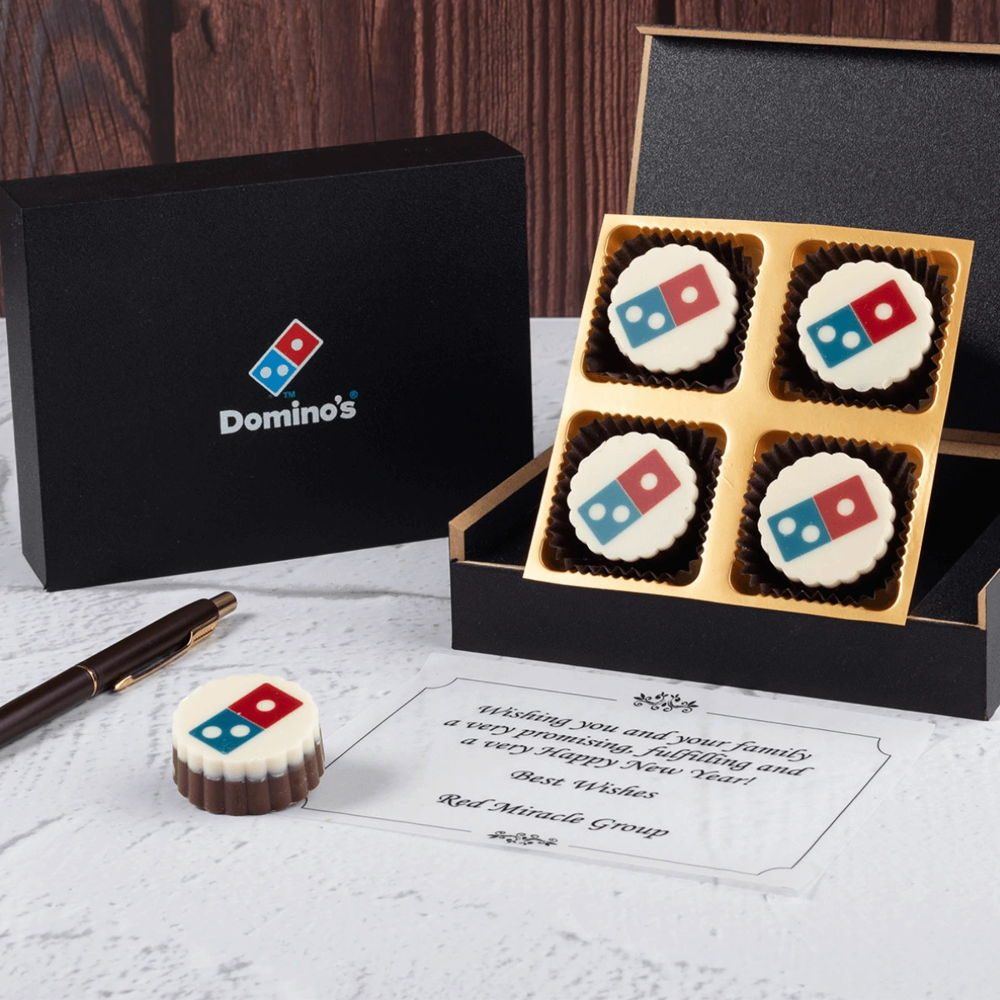
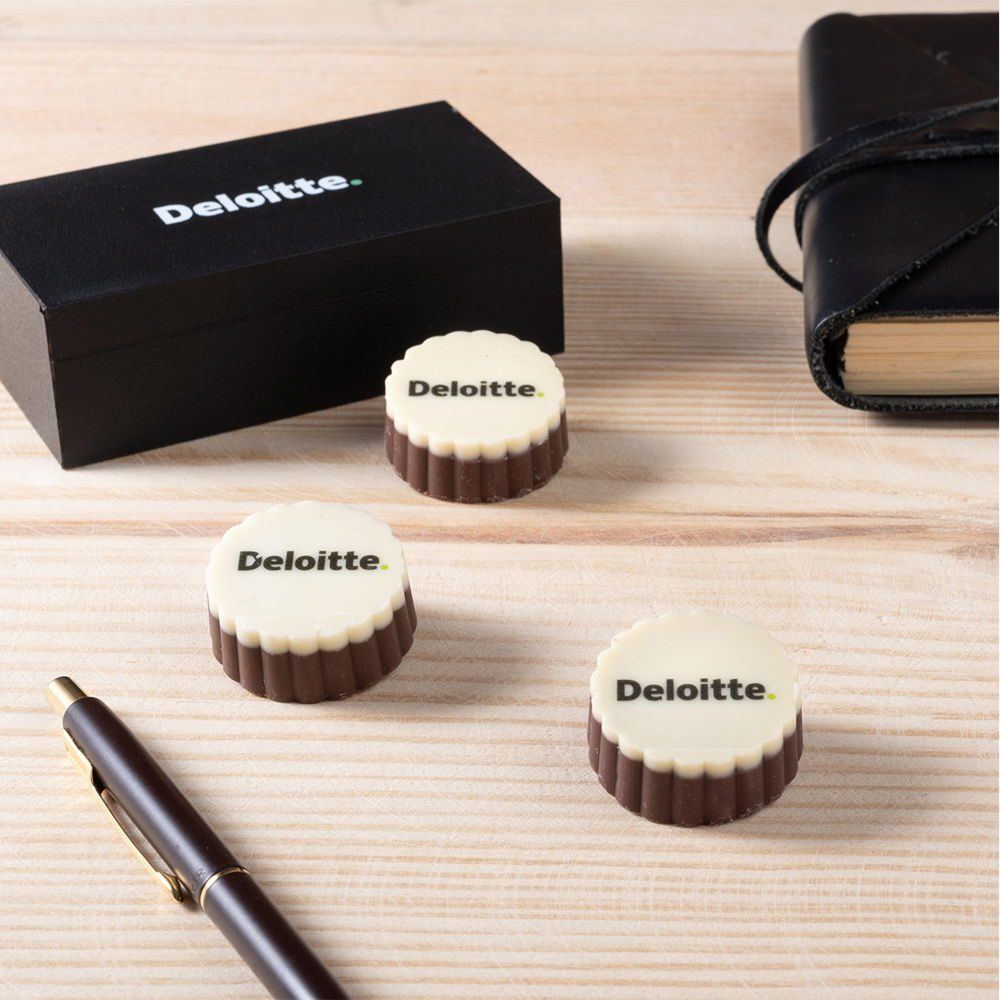
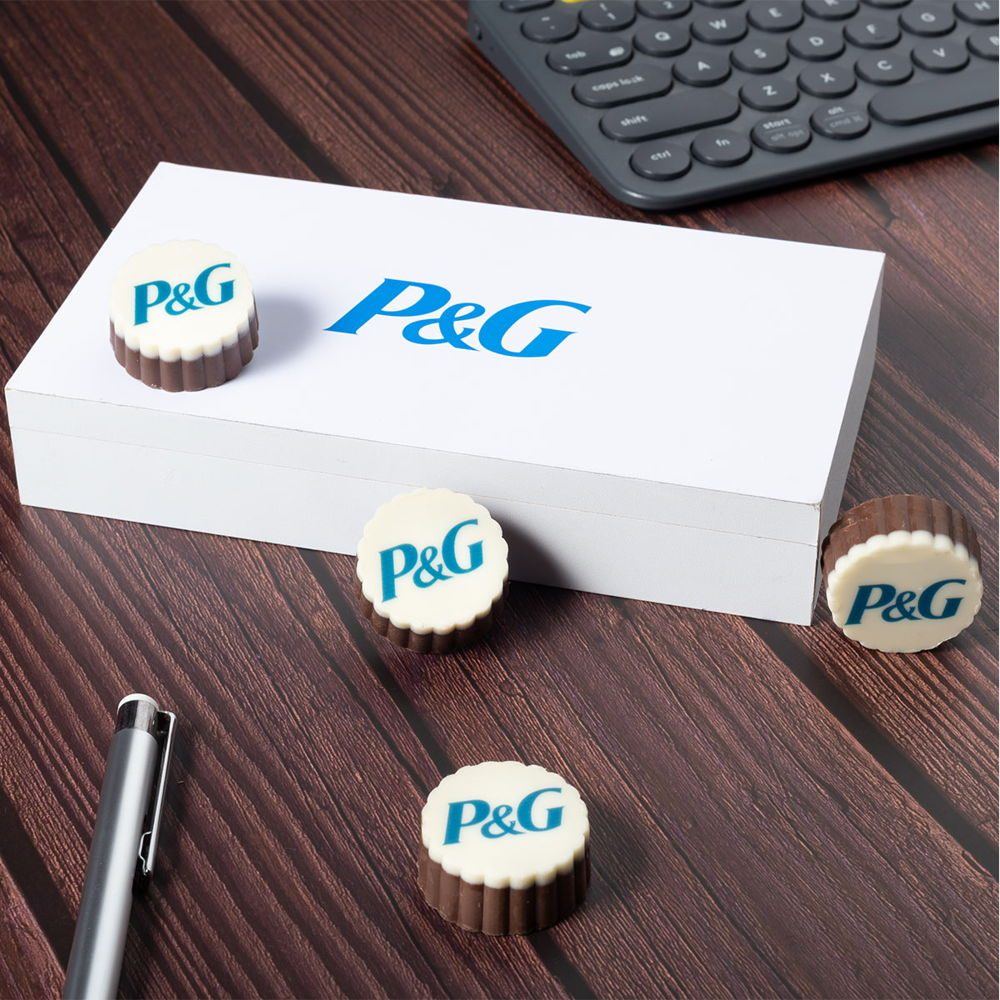
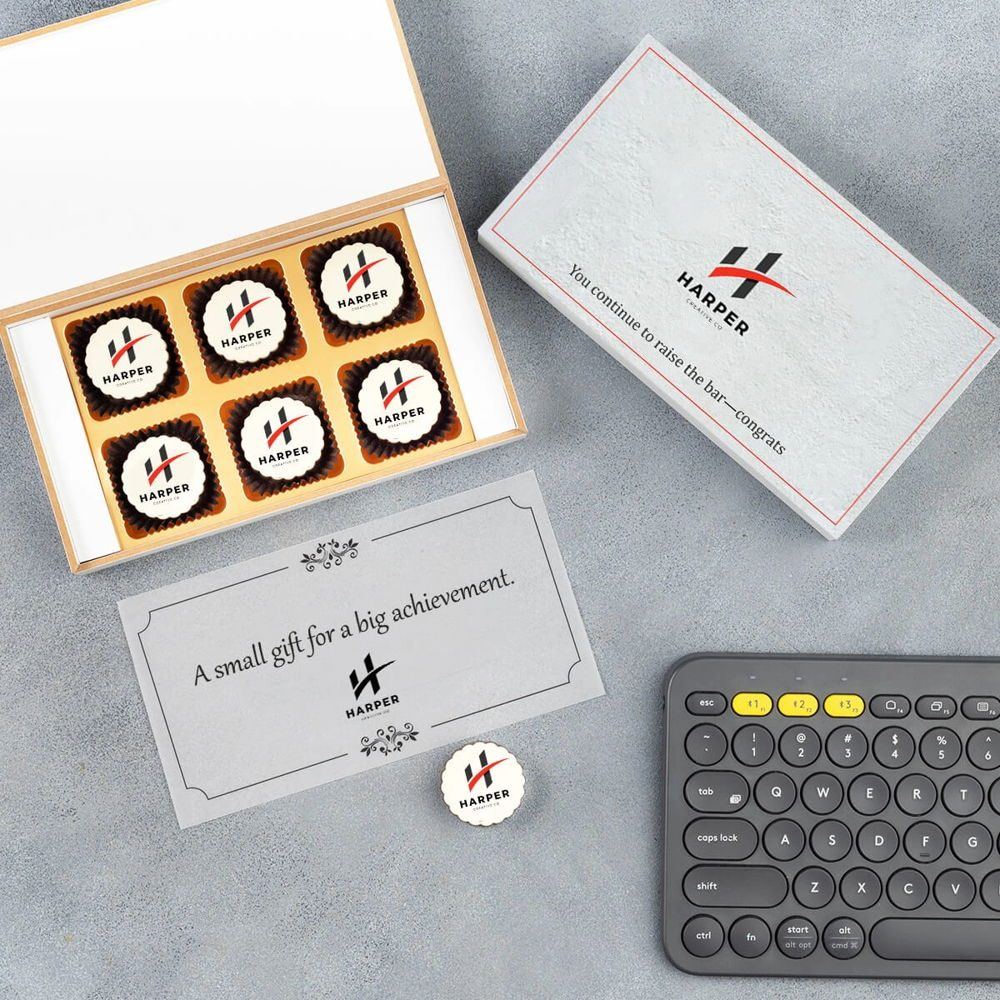
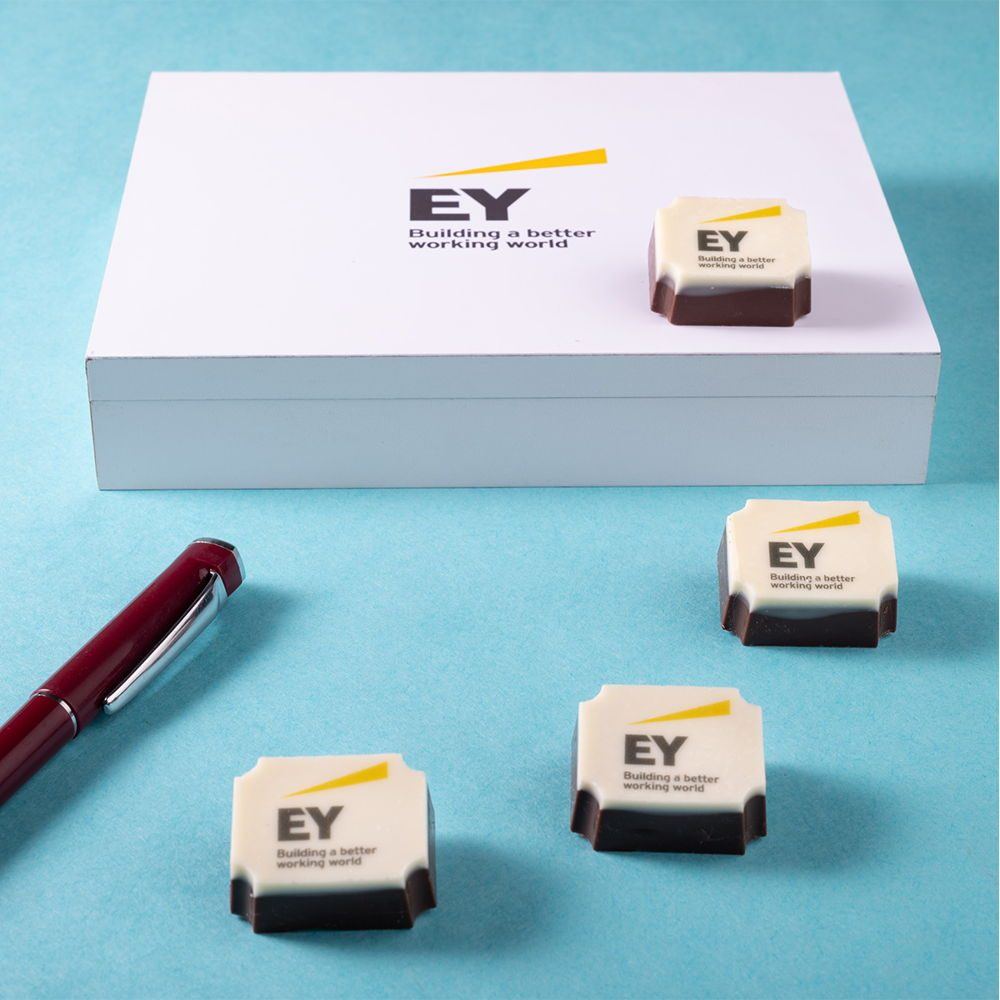
If the food gift is logo chocolate, ChocoCraft’s logo-printed chocolate boxes for exhibition booths currently list:
- A 20-box minimum, in a black or white box.
- Dark and white chocolate, with the logo printed on the chocolate.
- A best-before of about three months, stored below 25°C (77°F).
- $7.95 on that page. The sample sheet’s $9 is a placeholder.
Wrapper and allergen layout are in branded chocolate giveaways for trade shows and expos. White chocolate contains milk, so repeat a nut-free or vegan claim only when that box’s label says it.
How it captures a lead
Put the recap QR code on the sleeve. A food gift is a weak raffle prize. A visitor who cannot tell what is in the box remembers the uncertainty.
7. Lip balm and hand sanitizer
Why attendees keep it
These get used the same day. VistaPrint put sanitizer at 27 percent and lip balm at 25 percent. ASI’s health-and-safety category is about 400 lifetime impressions, so buy them for a dry hall, not for a year of exposure.
Who should receive it
Busy aisles and outdoor shows. Skip sanitizer if the audience will read it as a leftover from another event.
How it captures a lead
It should not try. A readable QR code is optional. Do not require a scan, and do not import those scans as opportunities. Procurement’s test is leak, smell, and whether the logo survives a day in a pocket.
8. Phone stands, webcam covers, and cable organizers
Why attendees keep it
Small desk tools stay in sight. ASI found that 83 percent of US consumers would be more likely to do business after a desk accessory, at about one cent per impression, a higher share than drinkware. Keep the logo readable at that size.
Who should receive it
Desk-based buyers. Northline’s 80 webcam covers are a side item, because many of its buyers live on a plant floor. A software booth would flip that quantity.
How it captures a lead
Leave the inexpensive version in an open tray. Trade a better version for a scan. Tell staff which tray is which, or the better one leaves with the first hand that reaches.
9. Backpacks for scheduled meetings
Why attendees keep it
VistaPrint put backpacks at 30 percent. A cinch sack and a laptop pack are different objects. The pack wins when a buyer will move their own bag’s contents into it.
Who should receive it
Pre-booked meetings only. Unclaimed bags are heavy to ship home. If you cannot name the recipients before you travel, do not bring them.
How it captures a lead
The meeting is the gate. Hand the pack over when the note is saved. Keep the bags out of sight, or the stack behind the counter becomes a negotiation.
10. Personalized gifts shipped after the show
Why attendees keep it
Bags are full by the last session, and heavy gifts get left behind. Ship the better gift. Do not ask someone to carry it.
- ASI: 68 percent would view an advertiser more favorably after a personalized item.
- PPAI’s 5-Second Impact study: a short personal message adds meaning for 48 percent.
- Product Power: 65 percent are very likely to keep a branded product for six months or longer when it is durable and well designed.
Who should receive it
The people sales will call. A candidate and a purchasing manager need different notes, so keep the hiring list off this shipment.
How it captures a lead
Collect the address only after a rep has written the next step: a quote, a visit, a sample, a date. Send it that week, while the sentence is still true. Procurement can pre-approve a small pool and let sales release units by name. Admin checks for a person’s name, a phone number, and a suite if the building needs one.
Giveaways that draw a crowd and still waste the budget
Stress balls, novelty toys, and oversized logos
A stress ball or a flashing gadget will stop a bored attendee. PPAI’s discard reasons explain the rest of the week:
- 38 percent reject a boring design.
- 37 percent already own too many similar items.
- 26 percent reject careless packaging.
- 26 percent reject a logo that is too large or bold.
- 25 percent reject too many brand lines.
- 13 percent said the item did not match the event.
Put ten of the clever object out as a conversation starter. Keep the budget on the ten items above.
Leave margin on the logo. One mark and one line beat a wrapper that is all brand. ASI found 79 percent would view an advertiser more favorably after a made-in-the-USA item, and 74 percent after a sustainable one. PPAI found 68 percent prefer recycled or reusable materials, and put sustainable products at about $3.8 billion, 14 percent of 2025 sales. Name the material. “Green tote” is not one.
Raffles that collect emails and no context
A raffle is a fair way to give away shirts or one backpack. It is a weak way to build the whole lead list. The form fills with people who wanted the prize. Tag those records as drawing entries. Northline’s drawing export never lands in the same report as the 18 booked meetings.
How to turn a giveaway into a lead
Badge scan, QR code, and demo gate
Use one capture method per item, and point every QR code at the same short page: the products shown, the territory rep, and a form. The tote card, the notebook, and the food sleeve can wait on the visitor’s phone. Tumblers and power banks cannot. Staff scan the badge while they are still talking. If the condition takes a paragraph, staff will shorten it by noon to “here, take it.”
What to write down before the visitor leaves
Five fields are enough. A long form at a noisy counter produces blank lines.
- Name
- Company
- Email, or the badge scan
- The problem they named
- The next step, in the rep’s words
Budget and timing can be added that night from the sentence, if the sentence exists.
Follow up while the meeting is still specific
Send the first note the next business morning, and put the booth sentence in the first line. Ship the follow-up gift that same week if they are on the short list. Do not hold the email for ten days of kitting. The email is the lead. The gift is the reminder.
What to measure after the show
Cost per impression is not cost per qualified lead
A tenth of a cent per impression can still be a failed booth if you captured no names. Judge the $22 power bank by the demos it accompanied, not by the unit price. PPAI’s channel totals, including about $7.1 billion in online sales (26.3 percent), describe the supplier market. They do not describe your show.
A scorecard marketing and finance can both read
| Signal | What to record | How to read it |
|---|---|---|
| Traffic items out | Totes, pens, lip balm, small desk tools | Did the aisle see you? This is not pipeline. |
| Notes written | Badge scans or forms that include the one-sentence need | The real top of the booth funnel. |
| Meetings held | Booked plus walk-ups that lasted long enough for a demo or a next step | The conversation the giveaway was supposed to support. |
| Follow-up gifts released | Names, ship dates, and the sentence that earned the gift | A gift with no sentence gets reviewed, not celebrated. |
| Opportunities opened | Count within 30 days, owned by a rep | The number finance should remember. |
| Giveaway cost per opportunity | All-in giveaway spend, including freight, divided by opportunities | Use this instead of cost per tote. |
| Items returned | Cartons that came home, and why | The quantity to cut next time. |
Forty unused totes and eight opportunities beat an empty table and 900 scans titled “leads.”
US rules that take items off the list
Ask these questions before the purchase order. This is not legal advice or a packing manual. If a supplier cannot answer, pick a different item.
Packaged food and the nine major allergens
Packaged food sold or given away in the United States has to identify major allergens. FDA’s allergen page lists:
- Milk, eggs, fish, and crustacean shellfish
- Tree nuts, peanuts, wheat, soybeans, and sesame
Chocolate often contains milk, and sometimes soy or a tree nut, depending on the recipe and the plant. Hand over the package and let the visitor read it. Some halls want a permit, a licensed caterer, or no outside food, so read the exhibitor manual before the purchase order. If you cannot keep the day’s supply cool and dry, pick a different item.
Power banks and lithium-battery shipping
Lithium batteries are regulated in freight. Ask the carrier and the show’s freight forwarder which service accepts a carton of power banks. The Pipeline and Hazardous Materials Safety Administration’s lithium battery page is the federal starting point. If the answer is slow, switch the gated gift to drinkware or a food box and keep ordinary cables as the floor-day utility item.
Green claims, Made in USA, and California Proposition 65
Environmental claims have to be specific. The FTC’s Green Guides, in 16 CFR Part 260, are the US reference. “Recycled PET, 50 percent” can be a claim if you can support it. “Eco-friendly” usually cannot. A Made in USA claim has its own test. Under the Made in USA Labeling Rule, the product has to be all or virtually all made in the United States. Prefer that claim when the paperwork exists.
California’s Proposition 65 can apply to a giveaway handed out at a California show or shipped to a California office, even if your company is in Ohio. Ask the supplier, in writing, whether a warning applies to that exact item. The state’s Proposition 65 warnings site explains the program. If the supplier is unsure, choose another item.
Where the numbers come from
Figures in this guide come from the studies below. They describe US promotional-product users, not a trade-show-only sample. VistaPrint’s early-2026 survey of 1,000 US adults is the source for the want-list. This guide does not link to promo-product sellers.
- ASI Global Ad Impressions Study, 2026/2027 edition
- PPAI 2025 U.S. Distributor Sales Volume Estimate
- PPAI, Promos’ 5-Second Impact (2025), 1,000 US consumers
- PPAI, Product Power 2026, more than 5,000 US respondents
- PPAI, The Things We Don’t Throw Away, more than 3,400 US consumers
- FDA, Food Allergies: What You Need to Know
Key takeaways
Questions to settle before you order
These are the decisions that still come up after the shortlist is chosen. Prices in the budget example are planning numbers.
What are the best trade show giveaways if I need leads, not a crowd?
Give the aisle a light item and keep the better item for a conversation. Totes, a pen with a notebook, lip balm, and small desk tools are traffic. Drinkware, a power bank, a food gift, or a shirt in a captured size needs a badge scan and one sentence about the need. Mail a named gift only to people sales will call. ASI’s estimate of 3,300 lifetime impressions describes how often a kept item is seen, not a qualified lead.
How many giveaways should I bring to a booth?
Ignore the show’s total attendance. Match totes to the scans your team can actually handle. Match drinkware and other conversation items to conversations per hour times staffed hours. Match follow-up gifts to accounts sales has named, plus two spares. Add about 10 percent for damage as a planning allowance, not a published scrap rate. Write that formula in one sentence on the purchase request so the quantity can be checked without a second meeting.
How much should a US exhibitor budget for giveaways?
Start from quotes, not from a national average. Give every line a job, a quantity, and a unit price, and keep a reserve for freight and crushed cartons. The sample sheet in this guide spends $4,493 of a $6,500 ceiling, with traffic items at a few dollars and eight follow-up gifts at $40. Those prices are placeholders. Replace each one. A reserve matters because a cheap unit price still fails if the carton never becomes a conversation.
Are food giveaways allowed at US trade shows?
Check the exhibitor manual before you purchase food. Some halls allow packaged food, some want a permit or a licensed caterer, and some ban outside food. Packaged food must name FDA’s major allergens: milk, eggs, fish, crustacean shellfish, tree nuts, peanuts, wheat, soybeans, and sesame. Chocolate often contains milk, and sometimes soy or a tree nut. Repeat a nut-free or vegan claim only when that package says it. A hot dock is a reason to switch items.
Can I ship a carton of power banks as ordinary freight?
Ask the carrier and the show freight forwarder before booking power banks as ordinary cargo. Lithium batteries are regulated in US freight. Start with the Pipeline and Hazardous Materials Safety Administration’s lithium-battery page. It is not a packing guide. If the answer is slow, gate drinkware or a food box instead, and leave ordinary cables in an open bowl. Charge one sample from the lot. A dead unit gets blamed on the demo.
Do sustainable giveaways change what attendees think of the brand?
A sustainable item helps when the claim is specific. ASI found 74 percent of US consumers would view an advertiser more favorably after a sustainable item, and 79 percent after a made-in-the-USA item. PPAI found 68 percent prefer recycled or reusable materials. The FTC Green Guides allow “recycled PET, 50 percent” when you can support it. “Eco-friendly” usually fails that test. Made in USA is separate: all or virtually all of the product is made in the United States.
Should every trade show giveaway include a QR code?
Use one page, and do not call an anonymous scan a lead. VistaPrint found 50 percent of people who had received a promotional product visited the brand site. In a PPAI study of more than 3,400 US adults, 42 percent visited a website and 13 percent did nothing. Put that page on the tote card, the notebook, and the food sleeve. For a tumbler or power bank, scan the badge in the conversation and write the need before they leave.
What should I do with giveaways left after the show?
Count what comes home before you judge the booth. Returned cartons are the quantity to cut. Do not relabel them as employee gifts. Employees are a separate list and need their own note. Returned food still has a date and a storage rule. If you cannot keep it cool and dry, do not save it for another show. Record why it came back. Ordering for the whole hall, instead of the conversations you can staff, is the usual cause.
Are T-shirts a good trade show giveaway?
People ask for shirts. An open stack is a weak giveaway. VistaPrint put T-shirts at 45 percent and hoodies at 40 percent. ASI, allowing more than one answer, found 55 percent would be excited to receive a T-shirt. Get the size on the form. Do not guess. Mark drawing entries as drawings unless a rep also wrote the need. A hoodie usually costs too much for the traffic table. Ship hoodies to a short list after the show.
When should I mail a gift after the trade show?
Ship the gift when the visitor would otherwise leave it behind or let it spoil, and only after the next step is written. ASI found 68 percent of US consumers would view an advertiser more favorably after a personalized item. In PPAI’s 5-Second Impact study, a short personal message added meaning for 48 percent. Collect addresses only for accounts sales will call, and send the gift that week. Keep recruiting gifts separate. A candidate and a buyer need different notes.